

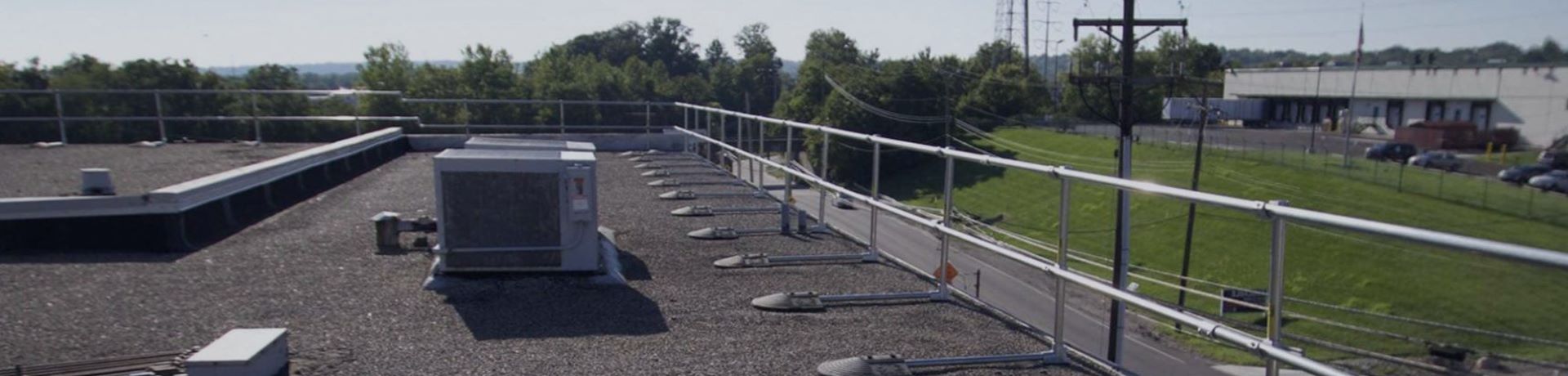
 Guardrail vs Handrail vs Safety Barrier: Choose the Right Control
A rail can look correct and still control the wrong hazard. Use the exposure, required outcome and acceptance evidence to choose between a guardrail, handrail, pedestrian separator, machine guard and vehicle barrier.
Start with the exposure, not the product label
Guardrails control a fall at an unprotected edge. Handrails give a person support along a route. Separators define or protect a walking route. Guarding machine access is a distinct control duty. Impact barriers resist a vehicle or load exposure. Those duties can occur on one drawing, but they do not become interchangeable because the parts look similar.
Distinction matters before a quote goes out. A pipe run at the side of a mezzanine may be called a guardrail, a safety barrier or a handrail in different conversations. If the drawing does not say what the rail must stop, the supplier can fabricate the geometry and still leave the actual control unresolved.
What is the primary exposure?
Person can fall from an exposed edge
Start with the guardrail duty. Identify the walking-working surface, the exposed edge and what lies below. In covered U.S. general-industry work, 29 CFR 1910.28(b)(1)(i) uses four feet as a common trigger, subject to the rule's other conditions and exceptions.
Evidence to settle: governing rule, height datum, intermediate protection, openings, top-rail and intermediate-member load basis, posts, fixings, substrate and acceptance record.
The route needs a graspable support
Start with the handrail duty. Mark the stair, ramp or access route and its transitions. A separate stair rail may also need to form the open-side barrier.
Evidence to settle: tread or route datum, grip, height, clearance, continuity through landings, end treatment, the stair-rail duty where applicable and the installation date for date-sensitive rules.
People need a defined or protected route
Start with the pedestrian separator duty. Map the route, crossings, openings, sight lines and vehicles or carts. A marked aisle is an operating control; a physical separator is another. Neither proves fall protection.
Evidence to settle: route drawing, traffic exposure, clear widths, accessible and emergency access, openings and gates, visibility and the owner of any change.
A person can reach a hazardous machine motion
Start with the machine-guard duty. Mark point-of-operation, nip-point, rotating-part or other hazardous areas and the body reach path during every operating state.
Evidence to settle: hazard map, opening geometry, guard fixing, normal and maintenance states, interlock or energy-isolation interface and machine-builder or risk-assessment approval.
A vehicle or moving load can reach the barrier
Start with the impact duty. Identify the vehicle or load, moving mass, approach geometry, speed, stopping or containment objective and the consequence of barrier penetration.
Evidence to settle: vehicle and route data, impact basis, structural design, foundation, repair strategy, traffic controls, owner and acceptance method. A personnel-guardrail height does not provide this evidence.
If two panels apply, keep both. Rarely does the answer become one product name. More often it becomes one run with two duties, two evidence sets and an interface that needs an owner.
The five control classes in one view
| Control | Main job | Typical selection question | Evidence not to omit |
|---|---|---|---|
| Fall-protection guardrail | Keep a person from falling from an exposed edge | Is there an open side or edge, and what is below it? | Governing rule, height datum, intermediate protection, load path, fixing and supporting structure |
| Handrail or stair rail | Give a handhold along a stair or route; a stair rail also forms the open-side barrier | Does the route need support, edge protection, or both? | Grip, height datum, clearance, continuity, transitions and the correct rule for each function |
| Pedestrian separator | Define a walking route or keep people away from a normal work zone | Is the risk loss of route control or a fall from an edge? | Route layout, traffic exposure, openings, visibility, change control and intended non-fall duty |
| Machine guard | Prevent access to a hazardous machine motion | Can a body part enter a point of operation, nip point or other hazardous area during any operating state? | Reach, opening geometry, fixing, operating cycle, interlock or energy-isolation requirements |
| Vehicle or load barrier | Resist a defined vehicle or load impact | What vehicle or load can reach the barrier, at what approach and with what consequence? | Vehicle and load data, approach geometry, impact basis, structural design, stopping or containment responsibility |
The row labels are design roles, not a universal product catalog. One assembly can occupy more than one row. Completion requires evidence for every assigned row.
Guardrail vs handrail: two different jobs
OSHA's general-industry definitions make the difference plain. 29 CFR 1910.21 defines a guardrail system as a barrier along an unprotected or exposed side, edge, or other area of a walking-working surface to prevent an employee from falling to a lower level. It defines a handrail as a rail used to provide a handhold for support.
A rail can be touched by a person. That does not make support its primary function. A rail can sit at the open side of a stair. That does not remove the need to ask whether the route also has a handrail.
Guardrail: the edge is the reason
Choose guardrail as the control only after the review identifies a fall exposure at an edge, opening, platform or other walking-working surface. The edge decision comes before the height decision. Mid-aisle rails may keep carts out of a work area without protecting anyone from a fall. Platform-edge rails may need fall protection, but the same assembly may also need a vehicle barrier if a lift truck can strike it.
For a fall-protection guardrail, 29 CFR 1910.29 provides a clear U.S. general-industry baseline:
| Criterion | General-industry value | What the value controls |
|---|---|---|
| Top-edge height | 42 inches, plus or minus 3 inches, above the walking-working surface | The vertical reference used for the rail |
| Top-rail force | At least 200 pounds within 2 inches of the top edge | The force the rail must resist |
| Downward deflection | Top rail must not deflect below 39 inches under the specified downward test | The remaining protective height under load |
| Intermediate member | At least 150 pounds | The strength of the protection below the top rail |
| Opening | No more than 19 inches where an intermediate member provides protection | The permitted gap in the rail bay |
The table is not a product label. It describes a system with a path into posts, fixings and the building structure. Load-statement compliance may come from the rail section while the base attachment or supporting slab remains unsuitable. Tracing the load path is part of the review.
Handrail: the body needs support
A handrail serves a person moving on a stair, ramp or access route. The useful questions concern grip, clearance, continuity and transitions. Datum selection also changes. For a general-industry stair, the handrail is measured from the leading edge of the stair tread to the top surface of the rail.
The same OSHA criteria give a 30-to-38-inch handrail range. Post-2017 stair rails must be at least 42 inches above the tread leading edge. Handrail clearance from another object is at least 2.25 inches. Handrails and stair-rail top rails also have a 200-pound force criterion.
Those numbers describe two related duties. Compact stair layouts may use a 42-inch stair rail as the open-side barrier. Lower handrails may still be needed for the handhold. A single top rail can sometimes serve both duties, but only where its height and other geometry fit both functions.
When the route leaves the stair and becomes a level platform, the datum changes again. Single-height drawings that carry one value from the first tread through the landing obscure the distinction. Mark the datum on the elevation and identify the handrail, stair rail and edge guardrail by role, not by the pipe diameter.
What “safety barrier” means in an industrial project
“Safety barrier” is too broad to price, fabricate or inspect. It may describe a pedestrian rail, machine enclosure, bollard line, traffic barrier or fall-protection guardrail. Use the term during early discussion. Before the drawing leaves the project team, replace it with the hazard and the control outcome.
Pedestrian separator
Pedestrian separators control a walking route or keep people out of a normal work zone. Warehouse-aisle rails are one example. Production-cell rails can be another. The design inputs include route width, crossings, vehicle interfaces, sight lines, cart traffic, emergency egress, maintenance access and who can open or change the line.
OSHA materials-handling rules require safe clearances and clear, marked aisles where mechanical handling equipment is used. Powered-industrial-truck training also covers pedestrian traffic, narrow aisles, surface conditions and load stability. Those requirements support the traffic review. They do not turn a pedestrian separator into a fall-protection guardrail.
If the separator also stands at a fall edge, add the fall-protection duty. If a lift truck can strike it, add the impact duty. Light-duty rails can do the first job while being a poor choice for the second or third.
Machine guard
Machine guards are tied to a machine hazard and the way a person can reach it. 29 CFR 1910.212 requires guarding against hazards such as point of operation, ingoing nip points, rotating parts, flying chips and sparks. The guard must address the specific exposure and must not create an accident hazard of its own.
This is where a perimeter rail often gets misclassified. Visitor-side pipe barriers two feet from a moving roller may keep a person out of a broad area. They do not prove that a worker cannot reach through, over or around the guard during normal operation, jam clearing or maintenance. Opening geometry, body reach, operating cycle and access state all matter.
Mark the hazardous motion and the body exposure. Follow the approach from the normal operating position. Include start-up, jam clearing, cleaning, lubrication and maintenance. State whether the opening is a fixed guard, movable guard, interlocked guard or another safeguard, and assign the owner of the guard design, fixing, interlock and isolation interface.
If the project crosses into machine safeguarding, the machine builder or a qualified risk-assessment owner may need to approve the solution. Sketch-level perimeter layouts should not become machine-guard claims without that review.
Vehicle or load barrier
Vehicle barriers resist an impact from a defined vehicle or load. They are not selected from the same table as a personnel guardrail. The project needs the vehicle type, moving mass, approach speed, angle, stopping distance, route, traffic controls, barrier layout and the consequence of penetration. The structural design then needs an impact basis and a load path into the floor or supporting structure.
That evidence may come from a tested product system, engineered design, recognized standard or project-specific calculation. The exact route must be named. Pallet-truck barriers are not automatically suitable for a counterbalance forklift at road speed.
The 42-inch top edge and 200-pound top-rail force from the personnel guardrail criteria do not establish vehicle resistance. They answer another question. Keep the numbers with that scope.
For pedestrian and vehicle interfaces, 29 CFR 1910.178 provides operating inputs for training, pedestrian traffic, narrow aisles and load stability. It does not provide a generic impact rating for a barrier. The barrier still needs project-specific evidence.
OSHA numbers that apply, and what they do not prove
The OSHA baseline is useful because it forces the project to name a function. It becomes misleading when the first familiar number is copied into a different exposure.
- Use the 42-inch top-edge criterion when the member is being reviewed as a general-industry guardrail above a walking-working surface.
- Use the 30-to-38-inch handrail range when the member is a stair handrail measured from the tread leading edge.
- Use the 42-inch stair-rail minimum when the stair rail is installed on or after January 17, 2017 and the governing rule applies.
- Keep the 19-inch opening and 150-pound intermediate-member criteria with the guardrail's intermediate protection.
- Do not use the 200-pound top-rail force criterion as an impact rating.
- Do not use a machine perimeter dimension as proof of machine safeguarding.
Construction rules, building codes, fire and egress requirements, accessibility rules, local amendments, equipment standards or owner specifications may add requirements. Resolve the governing set before a product dimension becomes a purchase requirement.
Two rails can measure the same and still need different evidence. That is why this page starts with control selection rather than another generic railing-height answer.
The combined-duty test
Mixed duties are common at mezzanines, loading areas, conveyor lines, maintenance platforms and warehouse boundaries. Walking-route rails may also sit beside a fall edge. Access gates may provide maintenance entry through a perimeter. Cart-facing separators may also face an impact duty. Interlocked panels may sit within a machine enclosure.
Select every duty the rail run must perform
No duty selected. The five-duty table below shows the evidence each option adds.
| Duty combination | Design outcome | Evidence must cover |
|---|---|---|
| Guardrail plus handrail | One or two members may serve the edge and handhold | Fall-protection criteria and handrail geometry, or separate members with a clear interface |
| Pedestrian separator plus fall edge | The run becomes a fall-protection system at the exposed edge | Route control plus the guardrail rule, datum, load path and openings |
| Pedestrian separator plus vehicle exposure | The route guard also needs a stated impact or protection strategy | Vehicle envelope, approach, impact basis, foundation and repair plan |
| Machine guard plus maintenance access | The access state becomes part of the guard design | Reach path, opening, operating states, interlock, lockout/tagout and guard owner |
| Vehicle barrier plus drainage or services | The barrier layout and support must avoid creating a new hazard | Impact load path, underground obstacles, clearances, maintenance and inspection access |
Do not solve a mixed-duty problem by assigning the most familiar name and adding “heavy duty” to the drawing. Heavy duty is not a design basis. The drawing needs a function and an acceptance statement for each duty.
Classify the exposure in six questions
The first pass does not require a product selection. It requires a defensible problem statement.
- What can the person reach or fall from? Mark the exposed edge, stair, platform, opening, route or machine hazard on the plan.
- What is the worst credible consequence? Consequences such as a fall to a lower level, loss of balance, contact with a moving machine, a vehicle strike or route confusion produce different control questions.
- What is the path? Follow the body, vehicle or load from the normal approach to the barrier and then into the supporting structure.
- Which states change the answer? Gates, removable sections, hoist areas, maintenance panels, pallet movement, shift changes and emergency access can alter the exposure.
- Which requirement applies? Name OSHA 1910, construction 1926, a building or fire code, a machine standard or an owner specification, as applicable.
- What evidence will close the decision? Measurements alone are rarely enough. Define the drawing, load or impact basis, test record, inspection record or risk-assessment output required.
For a fall edge, use the height workflow after the edge is confirmed. For a stair, define handrail and stair-rail duties before using the stair values. Machine reviews start with reach and operating states. Vehicle exposures start with the vehicle and route, not with an assumed guardrail section.
If the project team cannot name the exposure in one sentence, the drawing is not ready for a product quote.
Five failure modes that survive visual inspection
A system can look complete after installation and still lack the decision evidence that made it suitable. These failures are worth checking during design, fabrication and handover.
1. The wrong duty is written on the drawing
A note says “safety barrier” where the actual risk is a fall from a platform. The fabricator supplies a low perimeter rail. The installed item looks orderly, but nobody has established the edge-protection duty.
Correction: write the duty on the drawing, such as “fall-protection guardrail along open platform edge P-2” or “pedestrian separator along route W-4, no fall exposure.” Use a schedule when the same run changes duty.
2. Mixed duties have one evidence set
Shared-duty rails protect a stair handhold and a platform edge. The drawing cites one height and assumes the other function follows.
Correction: use two columns in the schedule for function and evidence. Repeat the review for every function the member performs.
3. The load path stops at the rail
Rail sections may have a load statement. The anchors, base plates, post spacing and supporting slab are left to the installer.
Correction: require one design chain from the loaded member to the building or supporting structure. Name who verifies each interface.
4. The reaching path is missing from machine review
Perimeter rails can surround a machine, but the drawing does not show where a worker stands, reaches, clears a jam or opens a maintenance panel.
Correction: mark normal and abnormal states. Bring the machine builder, maintenance lead and safety owner into the guard decision before the perimeter geometry is fixed.
5. Forklift-facing exposure is treated as a heavier pedestrian rail
The project describes a forklift route and asks for a “strong guardrail.” No vehicle data, approach angle, impact basis or foundation design is supplied.
Correction: define the vehicle or load exposure and the required barrier performance. Tested systems or engineered designs must match the actual route and supporting structure.
Verification and handoff
A good handoff makes the control obvious to the next person. The installer, maintenance team and future EHS reviewer should not have to infer the original purpose from the color of the rail.
- Duty schedule: each run has a unique identifier and a named function.
- Plan and elevation: walking-surface datum, tread datum, openings, gates, routes, machine and vehicle interfaces are marked.
- Requirement matrix: the governing rule and project specification are named for each duty.
- Load or impact evidence: calculations, test basis or product-system evidence follow the path into the supporting structure.
- Interface register: structure, foundation, gate, interlock, maintenance, vehicle control and owner are assigned.
- Open-item register: unresolved reach, load, access, traffic, finish or field-dimension items remain visible.
- Acceptance record: measurements, observations, evidence references and corrective actions are linked to the run.
- Change rule: any added gate, removed panel, changed machine state, new truck route or altered access process returns to the duty review.
For a fall-protection guardrail, the existing safety railing height and guardrail requirements guide turns classification into a measurement and acceptance process. For a wider industrial perimeter, the industrial safety railing systems page gives project context. For an installed system, the industrial safety railing inspection checklist moves a condition finding toward evidence and a recheck date.
The handoff should state where the system stops. Machine-control logic does not arrive automatically with a guardrail drawing. Traffic-management plans do not arrive automatically with a pedestrian separator. Dock vehicle restraints do not arrive automatically with a vehicle barrier. Name the interfaces before someone assumes they are included.
What the barrier RFQ should contain
A useful RFQ gives the supplier enough information to separate rail ranges, connections and evidence. It also protects the buyer from comparing quotes that do not cover the same duty.
- Exposure: fall edge, route support, pedestrian separation, machine access, vehicle impact or a stated combination.
- Governing basis: OSHA general industry, construction, building or fire code, accessibility, machine standard, owner specification or a stated combination.
- Drawings: dimensioned plan and elevation, walking-surface datum, tread datum, post spacing, openings, gates, removable sections and all interfaces.
- Structure: concrete, steel, grating or another substrate; member or slab conditions; anchor and embedment constraints; party responsible for structural verification.
- Machine inputs: operating states, reach path, guard type, interlock or isolation requirements and machine-builder approval route where relevant.
- Vehicle inputs: vehicle type, moving mass, approach, speed, angle, route, stopping or containment basis, barrier layout and foundation constraints.
- Environment: indoor or outdoor use, moisture, washdown, coastal or chemical exposure, temperature and finish requirements.
- Evidence deliverables: drawings, material and finish schedule, calculations or test basis, installation checks, acceptance record and maintenance or inspection criteria.
- Open items: dimensions or risks that remain unresolved, the owner and the date needed.
Do not send only a length and a request for “OSHA safety railing.” The supplier can quote a form, but the project still has to prove the function. On a mixed-duty project, separate the quote by duty so a lower pedestrian rail and a fall-protection guardrail do not merge into one ambiguous line item.
If the exposure includes a vehicle, machine hazard or unusual support condition, say that before price comparison. The correct response may be a design review rather than a standard railing quote.
Boundary questions that often change the answer
Is a handrail the same as a guardrail?
No. Graspable rails provide a handhold for support. Edge-barrier rails form protection against a fall. Stair-side rails form the barrier at the open side of a stair and can sometimes also serve as a handrail when the geometry meets both requirements. Keep the roles separate until the drawing proves the combined function.
Is every safety barrier a guardrail?
No. “Safety barrier” can describe a pedestrian separator, machine guard, vehicle barrier or another control. Those terms do not carry one universal height, load or impact rating. Name the hazard and the control duty before selecting the product.
Can a fall-protection guardrail work as a forklift barrier?
Not on the basis of its personnel-guardrail rating. The 42-inch and 200-pound criteria answer a fall-protection requirement. Vehicle resistance needs a stated vehicle or load exposure, impact basis, structural design and foundation review.
Can a machine perimeter rail be the machine guard?
Only if the design addresses the machine hazard and the reach path. The review needs to cover openings, fixing, operating states, maintenance access and any interlock or isolation requirement. The machine builder or qualified risk-assessment owner may need to approve the solution.
Can one rail be a guardrail and a handrail?
Yes, if it meets the applicable criteria for both duties. That may require a specific top-rail height, graspable profile, clearance and continuity. Dual-function systems should have one acceptance record for each function rather than a single generic “guardrail/handrail” note.
What should be included beside a barrier quotation?
Ask for the duty basis, drawings, material and finish, calculation or test evidence, installation assumptions, structural interface, open items and acceptance documentation. For a vehicle or machine exposure, require the project-specific design basis before comparing prices.
Where does a pedestrian separator stop and a fall guardrail begin?
The location of the hazard decides. Route lines keep a walking area or work zone distinct. Edge-protection rails control an unprotected side of a walking-working surface. If the same run sits at the edge, it inherits both duties and needs both evidence sets.
Keep the decision in the language of the exposure
The fastest way to compare a guardrail, handrail and safety barrier is to stop comparing names. Compare what each control must prevent. Walking support is the handrail's job. Fall-edge control is the guardrail's job. Route organization is the separator's job. Hazard access is the machine guard's job. Impact resistance is the vehicle barrier's job.
Once those duties are written down, the numbers become more useful. The 42-inch and 200-pound guardrail criteria belong to the fall-protection duty. The stair handrail range belongs to the handhold duty. The machine reach path belongs to the machine guard. The vehicle exposure belongs to the impact barrier.
This article uses OSHA general-industry requirements as a baseline. Project rules can differ. The durable point is the order: exposure, duty, evidence, interface, acceptance. That order keeps a familiar rail from hiding an unfamiliar risk.
Have a rail run with more than one job? Send the drawing, duty schedule, walking-surface datum, machine states, vehicle route and required acceptance evidence to HULK Metal. The correct next step may be a specific application page, a railing scope or an engineer-led review.
Discuss the project inputsOfficial sources and scope note
Reviewed November 28, 2026: OSHA 29 CFR 1910.21 for guardrail and handrail definitions; 1910.28 for the general-industry fall-protection trigger; 1910.29 for guardrail, handrail and stair-rail criteria; 1910.212 for machine guarding; 1910.176 for materials-handling clearances and marked aisles; and 1910.178 for powered-industrial-truck operating inputs. This article is a selection aid, not a structural calculation, machine risk assessment, traffic-engineering study or legal opinion.
Article Navigation
PRODUCTS
PROJECTS
OTHER RELATED ARTICLE